



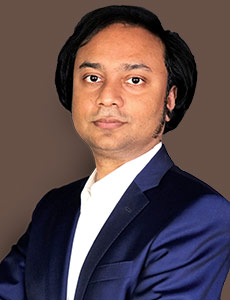
 Dr Hasan Ibne Akram, PhD, Founder and CEO
 The traditional IT industry, for instance, is inherently wary of security and safety loopholes. To the dismay of many organisations, these fears often come to life in the form of hacker-led attacks resulting in the theft of data and intellectual property.
That said, most businesses can recover from security breaches, overcoming substantial financial damages while continuing to place their faith in evolving technologies.
Now, compare such a scenario to the automotive sector, where three specific technological breakthroughs—connected cars, electrification of cars, and autonomous vehicles—are driving the industry into the next generation. All three disruptions, especially driverless cars, come with safety and security challenges that are unprecedented in the 100- plus year history of the automotive industry. “If an autonomous vehicle is not safe enough to navigate dynamic road conditions, you pay with the loss of human life. It is different from other industries where security loopholes can be recovered from,” stresses Dr. Hasan Ibne Akram, PhD, Founder and CEO of Matrickz, a company that develops automotive ECU software, specialised in safety and security.
Dr. Akram’s observation is spot on. Based on the incidences in the last five years related to driverless cars in operation – security centric red flags have forced the automotive industry to rethink its “autonomous is the way of the future” narrative. Going against the grain, Dr. Akram, a computer scientist, has dedicated a better part of the last few years in studying the various barriers that have delayed—or impeded—the mass adoption of Levels 4 and 5 driverless cars, which are intended to operate without driver assistance.
Driverless Cars Still Rely on Humans
As it stands, most autonomous vehicles “hand over the wheels” to the driver in the event of certain scenarios that mandate human intervention. The current industry standard for safety— ISO 26262— does not address autonomous driving and puts a ton of responsibility on the human driver.
To cover such a gap, the industry is presently constructing a new standard titled SOTIF (Safety of the Intended Functionalities). Furthermore, since all vehicles in the foreseeable future will be connected to the Internet, automotive cybersecurity has emerged as an area of concern, and several incidents in recent years have demonstrated that vehicle hacks are no longer a theoretical or exotic concept. To further complicate matters, the industry standard for security that is scheduled to be published soon—ISO/SAE 21434— also does not specifically address autonomous driving.
The automotive industry needs to draft new guidelines and standards to address safety and security drawbacks in autonomous vehicles. This is precisely where Matrickz, under the leadership of Dr. Akram and a team of passionate engineers, is striving to leave its imprint.
Besides working closely with a large consortium such as AUTOSAR, IEEE, Matrickz is presently collaborating with several global standardisation bodies to define the safety and security parameters for driverless cars. “In collaboration with the SAE (Society of Automotive Engineers) and ISO, we are trying to lead the industry in the right direction,” reveals Dr. Akram.
If an autonomous vehicle is not safe enough to navigate dynamic road conditions, you pay with the loss of human life
Blueprint is Already in Place
Although the driverless car revolution is years away from coming to fruition, the initial pieces are already in place, notes Dr. Akram. Functionality features such as Lane Keeping Assistance System (LKAS), Adaptive Distance Control, and hundreds of other embedded electronic control units (ECUs) have found mass adoption in today’s cars, and the coming together of these technologies— and their flawless interplay—is critical to automotive OEMs laying the groundwork for tomorrow’s multifaceted, autonomous, connected vehicle. Since a number of these systems have to communicate and interact with one another—under the guidelines of ISO 26262—automotive companies can test out various security designs and hardware security modules that will drive the requirements of upcoming driverless cars.
With “a slight touch of autonomous” already prevalent in today’s vehicles, there is a consensus in the industry that the first generation of fully-functional driverless cars will have to operate within a geo-fenced environment. “Practically speaking, there is no difference between a train and a geo-fenced car driving itself in a free lane. We are not far away from achieving this scenario,” says Dr. Akram, while adding that the automotive industry can learn from the experiences of the railways which has assured safety and security for over a century.
However, for driverless cars to step out of those boundaries—of the geo-fenced environment—a lot of scenario-based testing and simulations need to be carried out. Matrickz is deeply ingrained in the same. In one such use case, Matrickz built and tested a customised Autonomous Emergency Braking (AEB) system for one of its OEM clients. Typically, AEB technology triggers an emergency brake the second the AI in the system senses an approaching obstruction. “Even if it is just a balloon—that does not pose any threat to the velocity of the vehicle— the AEB automatically triggers a brake,” explains Dr. Akram.
In such a scenario, the AEB can be overridden only by the driver who has the option of switching to the advanced driver assistance system (ADAS) and taking charge of the vehicle. However, if the driver is asleep, the automatic brake is triggered within a fraction of six seconds. If the car is moving at 180 kmph, an unintended brake can cause serious havoc. To explain the same, Dr. Akram draws the analogy of a knife that is intended to cut vegetables and fruits, “If the knife somehow chops your finger, it is an unintended act. This is what we’re trying to eliminate with the brake systems in driverless vehicles.”
As part of the project, Matrickz tested such scenarios with dummy robots that served as a pedestrian obstructing the vehicle and triggering the AEB to function as intended. Matrickz tested various movements on the streets, and whether the embedded ECU and its software protocol were in sync with the environment outside. It also tested the data embedded inside the ECU to check for safety parameters, making significant breakthroughs in the process.
Some of the other recent use cases include Matrickz creating end-to-end ECU units for several high-end Level 1 and Level 2 autonomous cars. They range from ECUs to remotely access cars through smartphones, safety-related ECUs for steering and parking brakes, and built-in HMIs.
Four Pieces of the Puzzle Coming Together
In building such cutting-edge ECUs for German OEMs and Tier 1 suppliers, Matrickz offers a four-headed service model that comprises embedded software development, testing, safety, and cybersecurity. Through its Matrickz Embedded Development LAB, based in Munich, the company focuses on developing turnkey ECU software according to IS0 26262 and ASPICE norms.
Matrickz AUTOSAR LAB specialises in software integration, configuration and development according to AUTOSAR standard. Meanwhile, the Matrickz Test LAB excels in system testing, HiL, SiL, MiL testing, and verification.
And finally, the Matrickz Safety & Security LAB ensures safe and secured design, architecture, process compliance with upcoming ISO/SAE 21434 standard and implementation of automotive embedded software. Through these four departments, Matrickz can contribute to the entire development cycle of the V-Model starting from requirement engineering, development, and integration, all the way to verification.
"Practically speaking, there is no difference between a train and a geo-fenced car driving itself in an autonomous lane"
To drive the next wave of Level 4 and Level 5 driverless cars, Matrickz strongly believes in the integration of the four departments. “Design, engineering, software development, and driving safety have to grow closer together to build the car of tomorrow,” says Dr. Akram.
This model is a far cry from the conventional automotive industry in which several OEMs, Tier 1, and Tier 2 suppliers focus on various departments and are not necessarily in-sync. Every OEM operates based on its parameters and follows a certain set of country-specific rules—as it pertains to safety, security, and traffic regulations. Furthermore, OEMs build on specific technical, geographical, and process requirements. However, this model will prove futile with autonomous vehicles.
Dr. Akram elaborates, “Traditionally, the OEM passes vehicle-specific requirements to its Tier 1 supplier, and that information is passed onto Tier 2 engineers or ECU manufacturers. However, this model is not practical in autonomous vehicles due to external factors outside the vehicle.” The varying environment-specific conditions have also led to Matrickz pressing for “scenario-based testing” with its clients that are dynamic in nature. “There are too many unknowns when it comes to driverless cars, and we need flexibility in contracts,” he says. Additionally, he observes that the traditional development cycle of cars is about to change drastically due to the various layers and technological hurdles that automotive firms must overcome.
Leading the Charge into the Future
The future is bright for Matrickz, which has ambitious plans of adding a fourth revenue stream to its existing operations. Besides the designing and development of ECUs, training, and consulting, Matrickz intends to shore up its internal product development team. “We have invested heavily in our product development,” reveals Dr. Akram. While Matrickz does not expect to roll out a product anytime soon, it is laying the foundation for a product that will combine various hardware and software—bringing together a holistic safety and security solution for autonomous cars. “As part of our plans, we want to expand to the U.S. market and open another office in the Detroit area,” adds Dr. Akram.
Matrickz, which has always acted as a thought leader in its realm, is presently working closely with standardisation bodies, OEMs, and Tier 1 suppliers on ways to implement the brand-new ISO/SAE 21434 standard that addresses cybersecurity in the engineering and electronic (E/E) systems within vehicles. However, automotive companies are struggling to define policies, let alone foster a foolproof cybersecurity culture.
This is primarily because Tier 1 suppliers and OEMs typically use different terminologies and their proprietary classification levels regarding cybersecurity, which creates communication, technical, and liability issues.
To improve the readiness of the new standard, Matrickz has proposed several passive and active strategies—through a recently-released whitepaper—to enable organisations to overcome cybersecurity hurdles.
On a concluding note, if you happen to visit a large auto show convention in Germany or elsewhere in Europe, there is a good chance that you’ll hear a lecture from Dr. Akram, a highly sought-after speaker and trailblazer in Europe’s automotive industry for nearly two decades.
And finally, the Matrickz Safety & Security LAB ensures safe and secured design, architecture, process compliance with upcoming ISO/SAE 21434 standard and implementation of automotive embedded software. Through these four departments, Matrickz can contribute to the entire development cycle of the V-Model starting from requirement engineering, development, and integration, all the way to verification.
"Practically speaking, there is no difference between a train and a geo-fenced car driving itself in an autonomous lane"
To drive the next wave of Level 4 and Level 5 driverless cars, Matrickz strongly believes in the integration of the four departments. “Design, engineering, software development, and driving safety have to grow closer together to build the car of tomorrow,” says Dr. Akram.
This model is a far cry from the conventional automotive industry in which several OEMs, Tier 1, and Tier 2 suppliers focus on various departments and are not necessarily in-sync. Every OEM operates based on its parameters and follows a certain set of country-specific rules—as it pertains to safety, security, and traffic regulations. Furthermore, OEMs build on specific technical, geographical, and process requirements. However, this model will prove futile with autonomous vehicles.
Dr. Akram elaborates, “Traditionally, the OEM passes vehicle-specific requirements to its Tier 1 supplier, and that information is passed onto Tier 2 engineers or ECU manufacturers. However, this model is not practical in autonomous vehicles due to external factors outside the vehicle.” The varying environment-specific conditions have also led to Matrickz pressing for “scenario-based testing” with its clients that are dynamic in nature. “There are too many unknowns when it comes to driverless cars, and we need flexibility in contracts,” he says. Additionally, he observes that the traditional development cycle of cars is about to change drastically due to the various layers and technological hurdles that automotive firms must overcome.
Leading the Charge into the Future
The future is bright for Matrickz, which has ambitious plans of adding a fourth revenue stream to its existing operations. Besides the designing and development of ECUs, training, and consulting, Matrickz intends to shore up its internal product development team. “We have invested heavily in our product development,” reveals Dr. Akram. While Matrickz does not expect to roll out a product anytime soon, it is laying the foundation for a product that will combine various hardware and software—bringing together a holistic safety and security solution for autonomous cars. “As part of our plans, we want to expand to the U.S. market and open another office in the Detroit area,” adds Dr. Akram.
Matrickz, which has always acted as a thought leader in its realm, is presently working closely with standardisation bodies, OEMs, and Tier 1 suppliers on ways to implement the brand-new ISO/SAE 21434 standard that addresses cybersecurity in the engineering and electronic (E/E) systems within vehicles. However, automotive companies are struggling to define policies, let alone foster a foolproof cybersecurity culture.
This is primarily because Tier 1 suppliers and OEMs typically use different terminologies and their proprietary classification levels regarding cybersecurity, which creates communication, technical, and liability issues.
To improve the readiness of the new standard, Matrickz has proposed several passive and active strategies—through a recently-released whitepaper—to enable organisations to overcome cybersecurity hurdles.
On a concluding note, if you happen to visit a large auto show convention in Germany or elsewhere in Europe, there is a good chance that you’ll hear a lecture from Dr. Akram, a highly sought-after speaker and trailblazer in Europe’s automotive industry for nearly two decades.
× 
CIO Applications Europe Weekly Brief
Be first to read the latest tech news, Industry Leader's Insights, and CIO interviews of medium and large enterprises exclusively from CIO Applications Europe
